
21 Picket Bathroom Tile Ideas for a Fresh Geometric Look
Tired of boring rectangles? Picket tile is the slim, elongated tile that turns any bathroom wall or floor into a geometric moment. I have spent way too many evenings scrolling bathroom remodel photos, and picket tile keeps winning my vote.
It stacks, zigzags, and herringbones into patterns that fit every budget and style. Ready for some inspiration? These 21 looks cover showers, floors, vanities, and even tiny niches. Grab your coffee and start saving your favorites.
1. Herringbone Picket Tile Shower Wall

Herringbone turns plain picket tile into a showstopper. Each tile zigs into the next, so your shower wall gets movement without a single loud color. Ever notice how a classic pattern makes a small stall feel custom?
I’d run it floor to ceiling on the back wall only. That keeps the budget sane and lets the pattern steal the show. Add a built-in niche in the same tile, and you get a tidy spa moment.
- Best size: slim tiles around two by eight inches
- Grout tip: match the tile color for a soft, wavy look
- Finish: glossy ceramic bounces light around the stall
2. Vertical Stack Picket Tile for Tall Ceilings
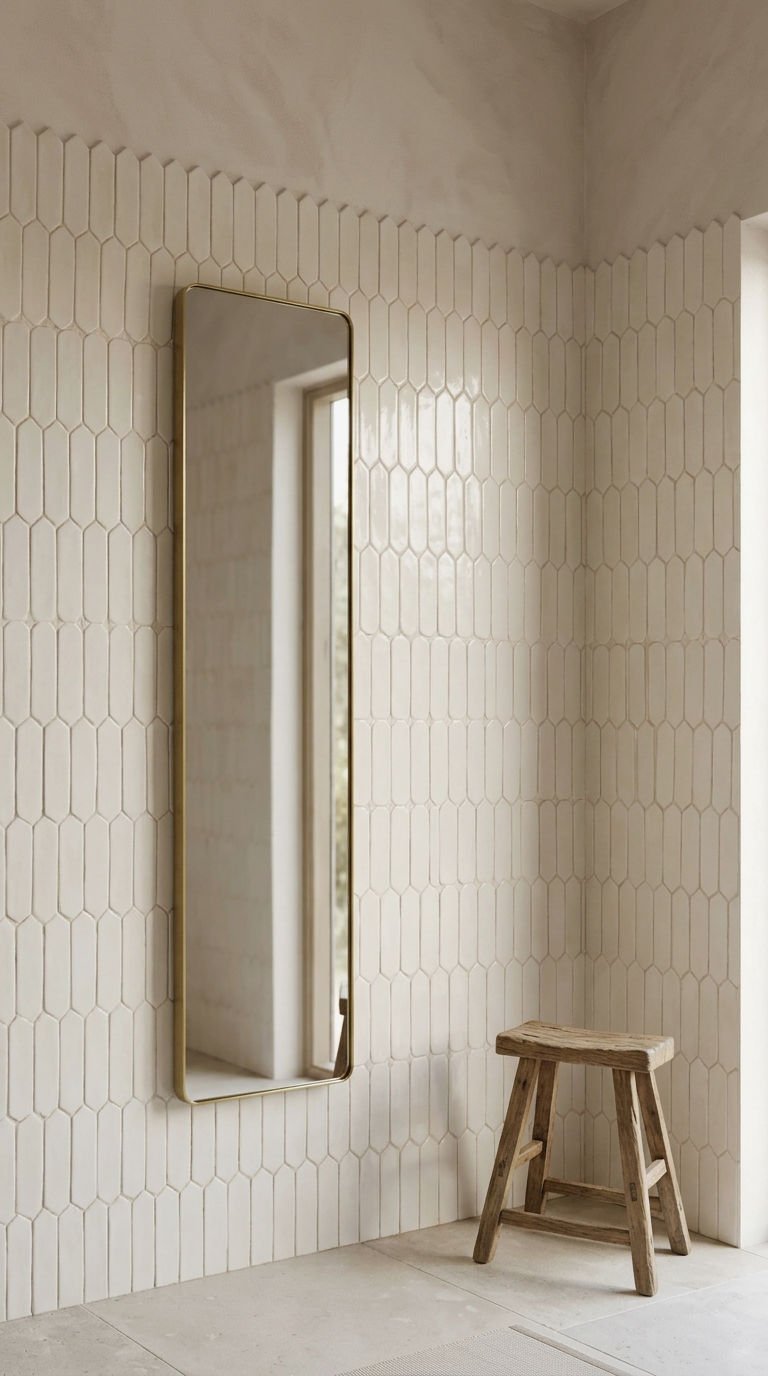
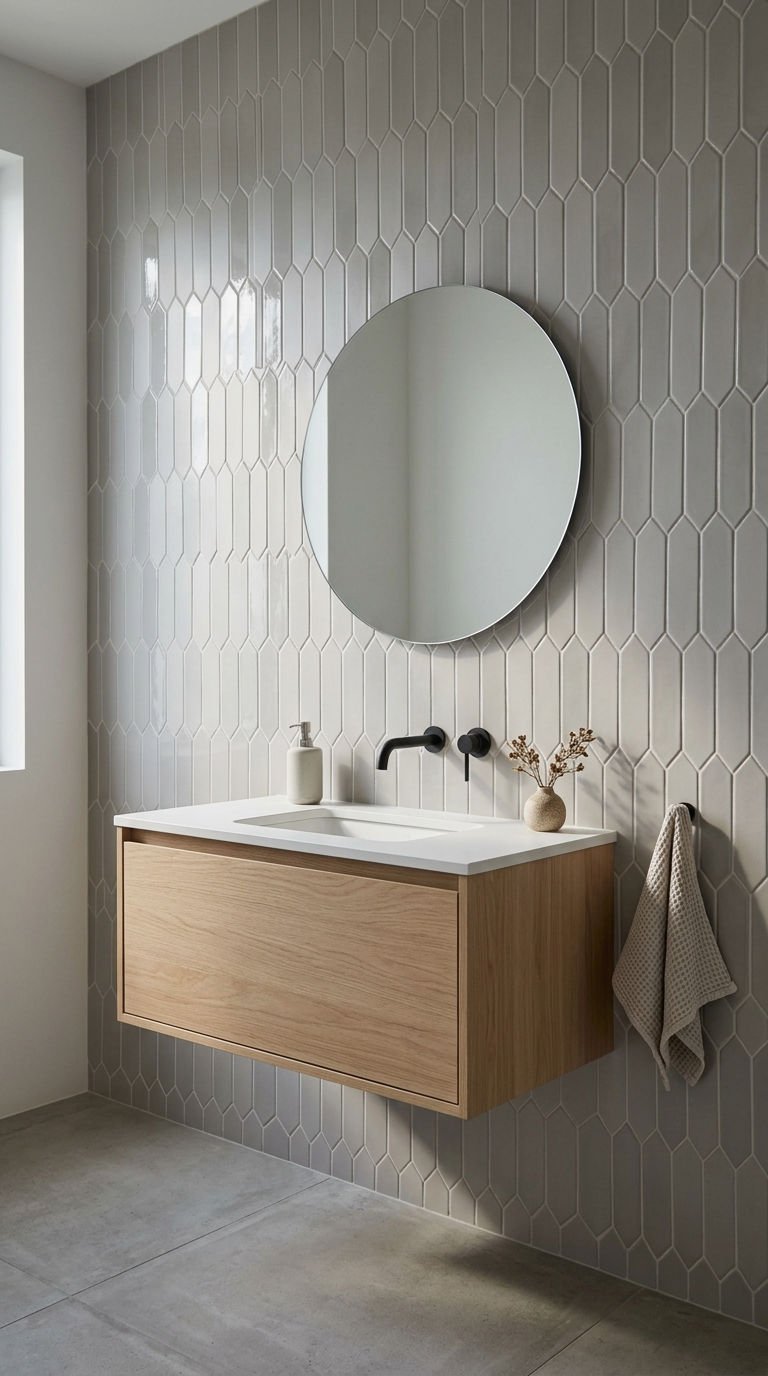
Stack your picket tiles straight up and down, and the ceiling suddenly looks a mile high. This layout works like pinstripes on a good suit. It stretches the wall and keeps the lines crisp and modern. FYI, tight grout joints look the sharpest.
I love this trick in older homes with chunky proportions. Pair it with a pale tile color, and the whole room feels lighter and taller.
Skip busy wall art in this setup. The tile pattern already supplies plenty of visual interest, and a simple fixture keeps everything calm.
- Layout: straight stack with narrow grout lines
- Color pick: warm white or soft gray
- Bonus: pairs well with a long vertical mirror
3. Matte Black Picket Tile Accent Wall
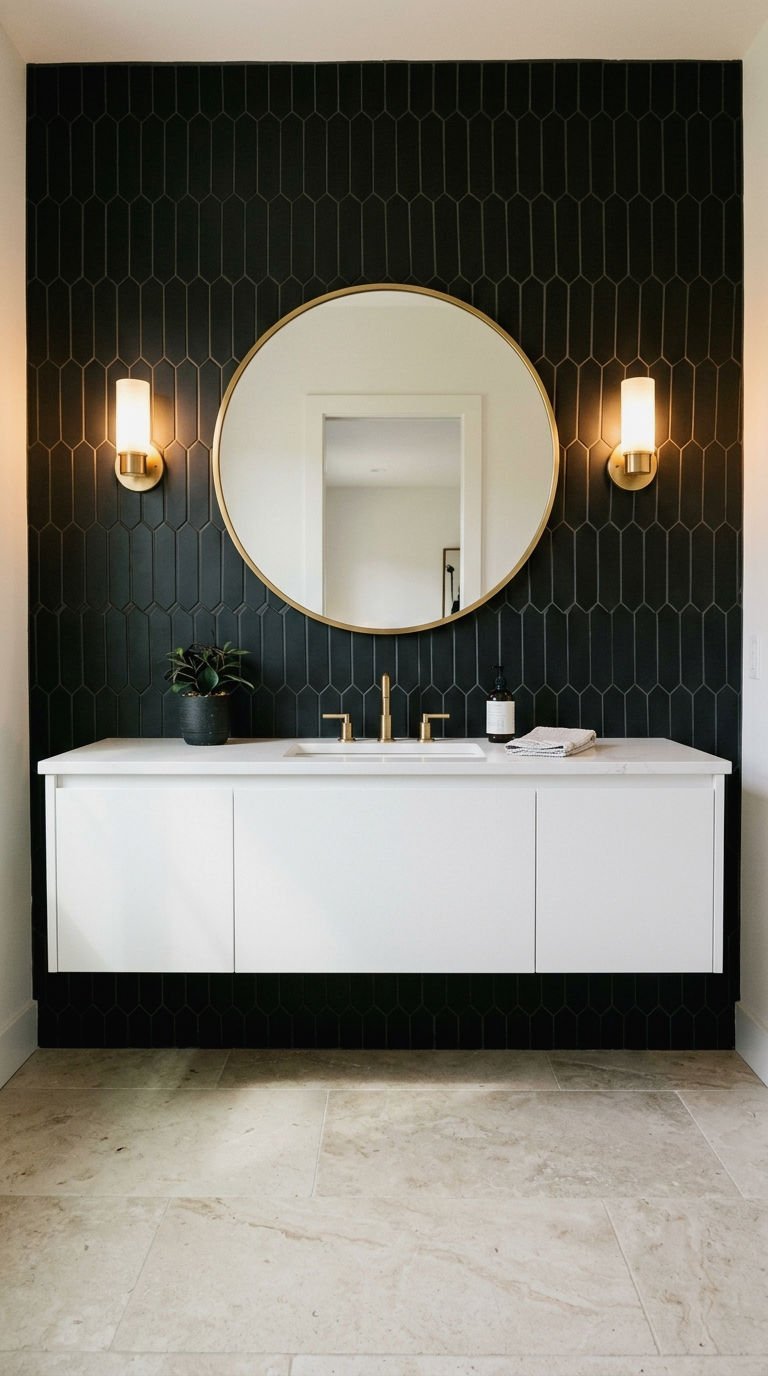
Want drama without a full gut job? Matte black picket tile behind the vanity does the heavy lifting. The flat finish hides water spots better than glossy black, which saves your sanity on cleaning day.
Balance the darkness with a light floor and warm lighting. Otherwise your bathroom turns into a cave, and not the cozy kind. I’d keep the grout slightly lighter than the tile so the geometry still pops.
Add a wood shelf or a plant for contrast. Those organic touches soften the look and make the black feel intentional.
- Where to use it: one accent wall only
- Lighting: warm bulbs around the mirror
- Cleaning: wipe with a soft cloth to avoid streaks
4. Soft Sage Green Picket Tile Backsplash

Sage green feels calm, earthy, and just a little bit fancy. A picket backsplash behind the sink brings that color down to eye level, where you notice it every single morning.
Stack the tiles in a classic brick offset, and the geometry stays gentle instead of loud. Pair the green with white towels and a wooden shelf. Suddenly your sink area looks like a boutique spa. 🙂
Not sure about color commitment? Hold a sample against your towels first. Sage plays nicely with most neutrals, so you will rarely regret it.
- Palette: sage, cream, and natural oak
- Grout: warm white keeps the edges soft
- Style match: works with modern and farmhouse looks
5. Chevron Picket Tile Vanity Wall

Chevron gives you arrows of energy in a pattern that still feels tidy. Cut each picket tile at an angle, and the pieces meet in a crisp V down the center. Ever seen a vanity wall that stops guests mid-sentence? This is it.
Ask your installer to center the point right above the sink. That one detail makes the pattern look planned instead of random. IMO, the extra cutting fees earn their keep here.
Chevron also looks great on a half wall behind a freestanding vanity, where the pattern gets plenty of breathing room.
- Skill level: hire an experienced installer
- Best tile: ceramic with clean, sharp edges
- Focus point: center the V above the faucet
6. Picket Tile Floor in a Small Powder Room

Small powder rooms deserve big floor energy. Picket tile on the floor pulls the eye across the room, and a bold pattern distracts from the lack of square footage. Choose a slip-resistant finish, because wet socks and glossy tile do not mix.
I like running the tiles on a slight diagonal. It makes the walls feel farther apart, and the room breathes a bit more.
Pair the pattern with a simple pedestal sink and a pretty mirror. Too many fancy details fight with the floor, and the floor deserves the spotlight.
- Surface: matte or textured for better grip
- Layout: herringbone or diagonal stack
- Grout: mid gray to hide everyday scuffs
7. White Picket Tile With Charcoal Grout
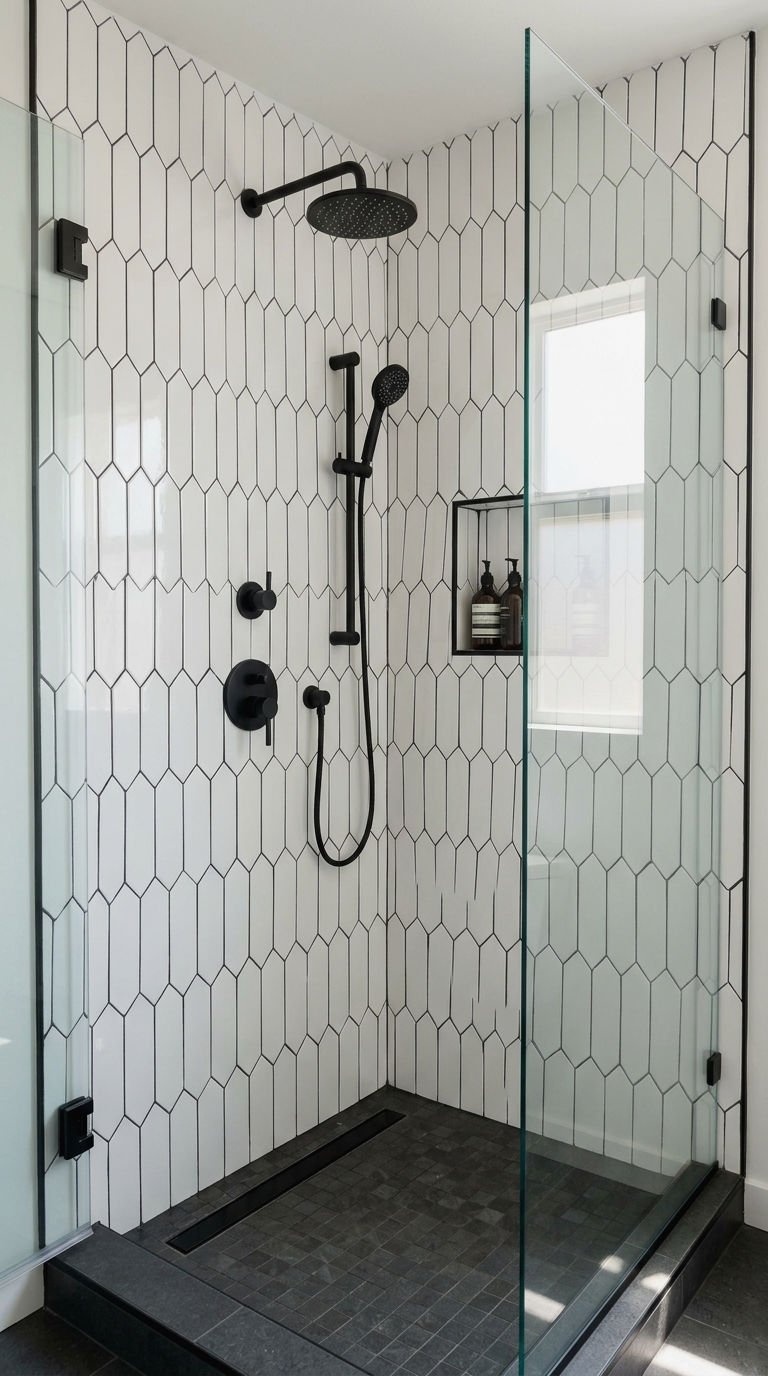
Plain white tile looks fine, but charcoal grout makes it look designed. The dark lines trace every picket shape, and your wall turns into a graphic drawing. It costs almost nothing extra, so why not try it?
This combo suits minimalists who want pattern without color. Seal the grout well, and those dark lines stay even and crisp for years.
Swap grout colors if your taste changes. A medium gray softens the contrast, while pure black makes the pattern bold and graphic. Test a small patch before you grout the whole wall, since colors dry lighter than they look.
- Contrast level: high and graphic
- Grout width: thin lines keep it refined
- Care: reseal the grout once a year
8. Terracotta Picket Tile for Warm Spa Vibes

Terracotta brings sun-baked warmth to a bathroom that usually feels cold. The soft orange-brown tone makes picket tile look handmade and inviting, even in a plain white room. Add linen towels, and you land in a Mediterranean spa.
I’d skip busy patterns here. A simple stack lets the color do the talking, while natural tile variation adds charm.
Terracotta looks lovely in morning light. Add a woven rug, a wooden stool, and a few plants, and the room feels collected rather than staged. Natural materials always play well with earthy tile.
- Mood: warm, earthy, and relaxed
- Pair with: cream walls and woven baskets
- Accent: aged brass or matte bronze hardware
9. Basketweave Picket Tile Niche

Shower niches often look like an afterthought. Line yours with picket tile in a basketweave pattern, and that little shelf becomes a design feature. Pairs of tiles alternate direction, which creates a woven look in a tiny footprint.
This idea works because a niche is small enough for a fancy pattern without a big bill. Choose a contrasting color from the main wall so the weave stands out.
Cut the tiles slowly with a wet saw, since small pieces chip easily. A steady hand pays off in a niche you see daily.
- Scale: perfect for one niche or two
- Contrast: pick a deeper tone than the wall
- Detail: add a stone sill for a clean finish
10. Two Tone Picket Tile Wainscoting
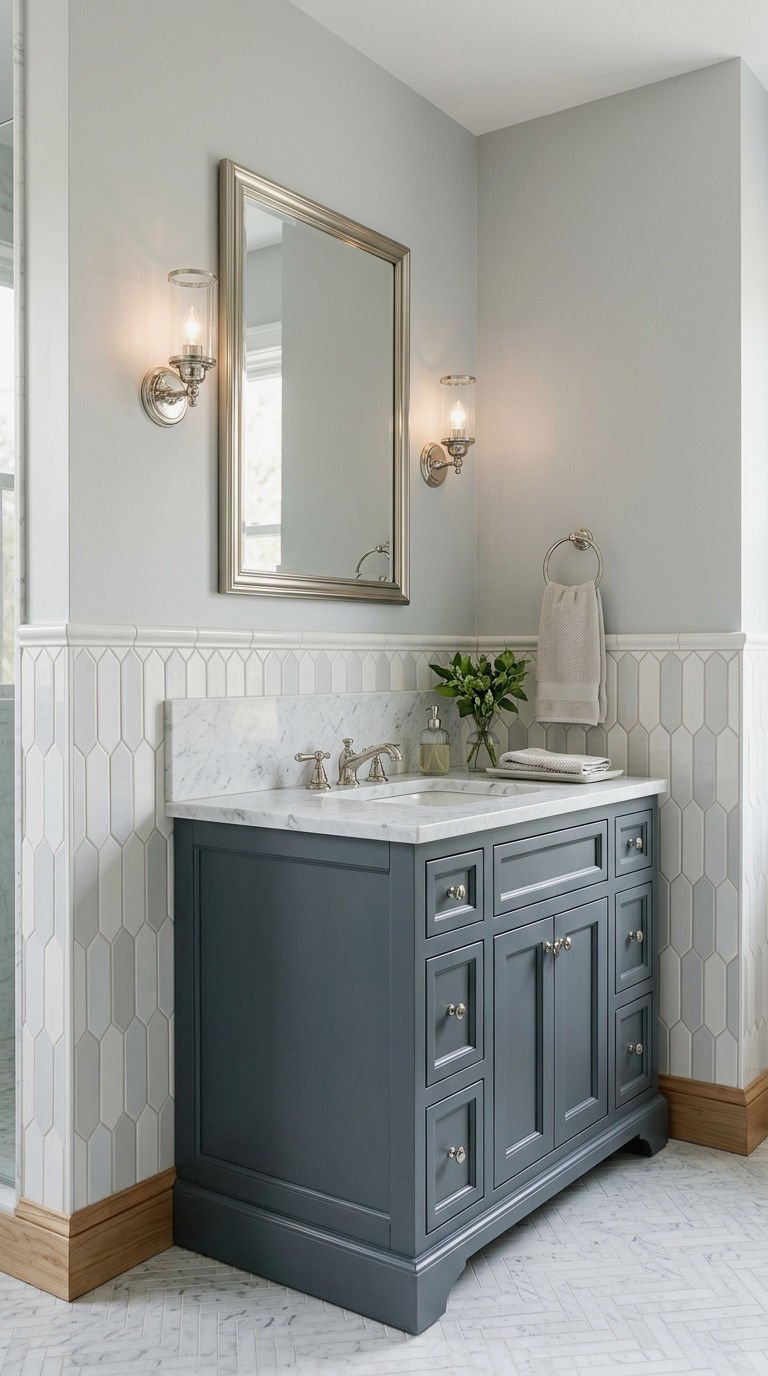
Wainscoting is not just for dining rooms. Run picket tile to chair-rail height, then finish with a painted upper wall. The result feels classic, tidy, and a little bit British cottage.
Pick two tones that sit close together, like soft white tile and pale gray paint. A slim ledge tile on top acts as a neat cap. I find this layout forgiving, because you never tile the whole wall.
Finish the top with a thin trim in the same color for a polished edge. Small details like that make a bathroom look expensive.
- Height: about waist to chest level
- Top edge: use a trim tile or a bullnose
- Paint: choose a moisture-resistant finish
11. Ombre Picket Tile Gradient Shower

Gradient showers look like a sunset on your wall. Start with a deep shade at the bottom, then fade to a lighter tint toward the ceiling. Each picket tile steps the color along, so the shift feels smooth instead of abrupt.
Order extra tiles in every shade, because color planning takes patience. Lay the tiles out on the floor first and tweak the flow before any adhesive goes on.
Start with a pale tone if you feel nervous. A subtle fade still delivers the gradient effect without a big color commitment.
- Palette: four to six tints of one color
- Best colors: blues, greens, and soft pinks
- Prep: dry-lay the whole wall first
12. Navy Picket Tile Behind a Freestanding Tub
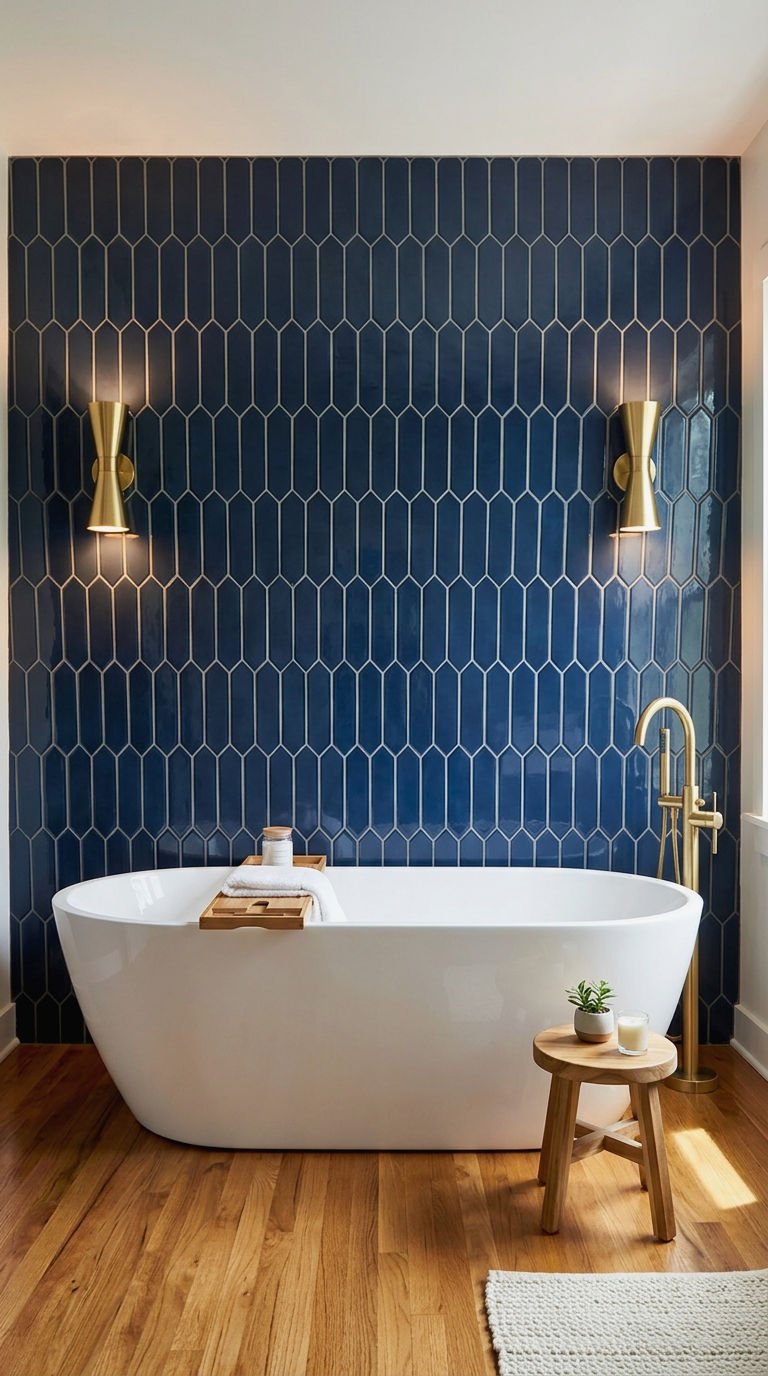
A freestanding tub deserves a backdrop that frames it like art. Navy picket tile does exactly that. The deep blue makes a white tub glow, and the geometric pattern adds texture without stealing focus.
Keep the tile to the wall behind the tub. Then hang a single sconce on each side. Honestly, it looks like a hotel suite, minus the tiny shampoo bottles.
Add a small side table for a candle and a towel. Those simple extras complete the picture, and the navy wall keeps every item looking sharp and intentional.
- Contrast: white tub against a navy wall
- Layout: vertical stack or herringbone
- Lighting: wall sconces for a soft glow
13. Picket Tile and Brass Fixture Pairing
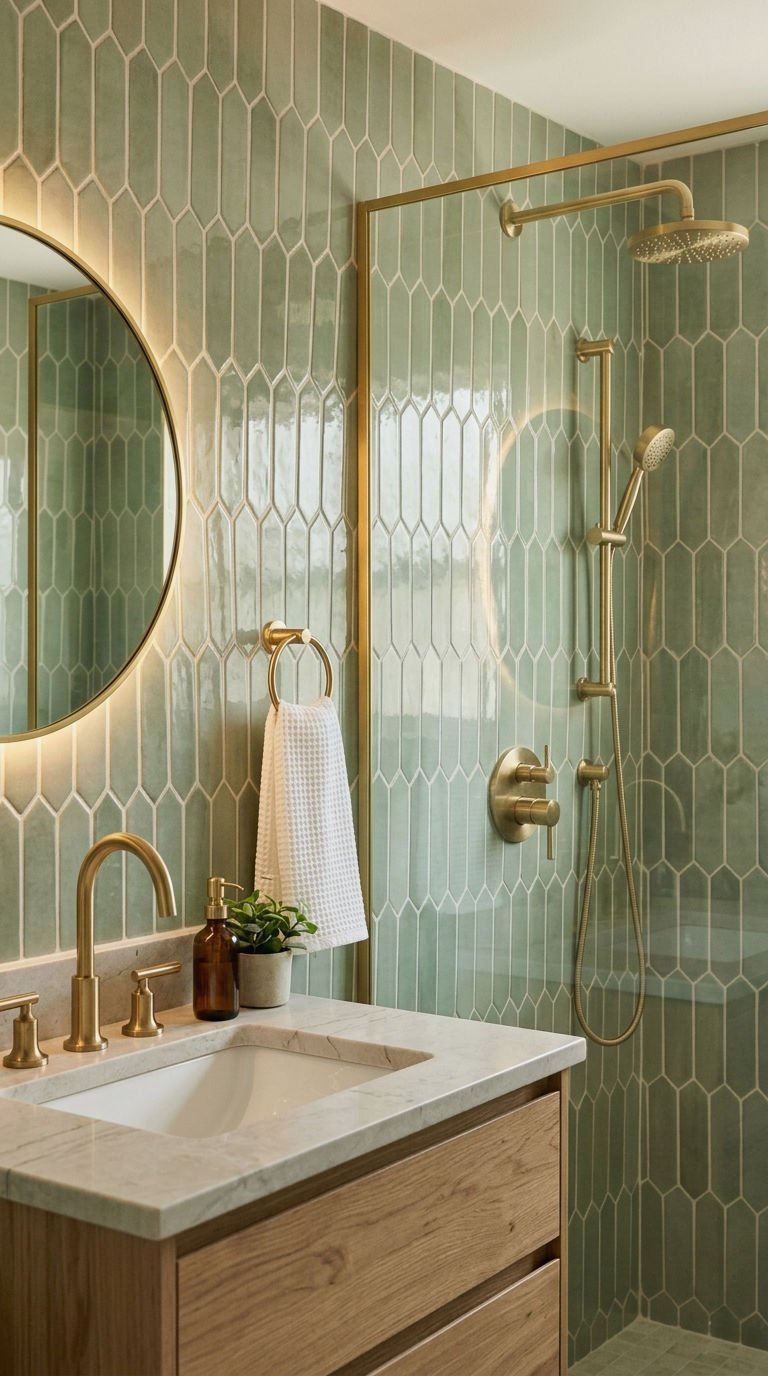
Brass and picket tile make a gorgeous team. The warm metal pops against cool ceramic, and the geometric lines frame your fixtures the way a gallery wall frames art. Choose satin brass for a softer look.
I’d pair brass faucets with white, green, or blush tile. Avoid mixing too many metals, or the room starts to look confused.
Match the shower head and towel bars to the faucet, so the metal feels like one family. Then let the tile stay quiet so the brass can shine without competition.
- Best tile colors: white, sage, blush, and navy
- Metal choice: brushed or satin brass
- Rule: limit the room to two metal finishes
14. Offset Brick Pattern Picket Tile Wall
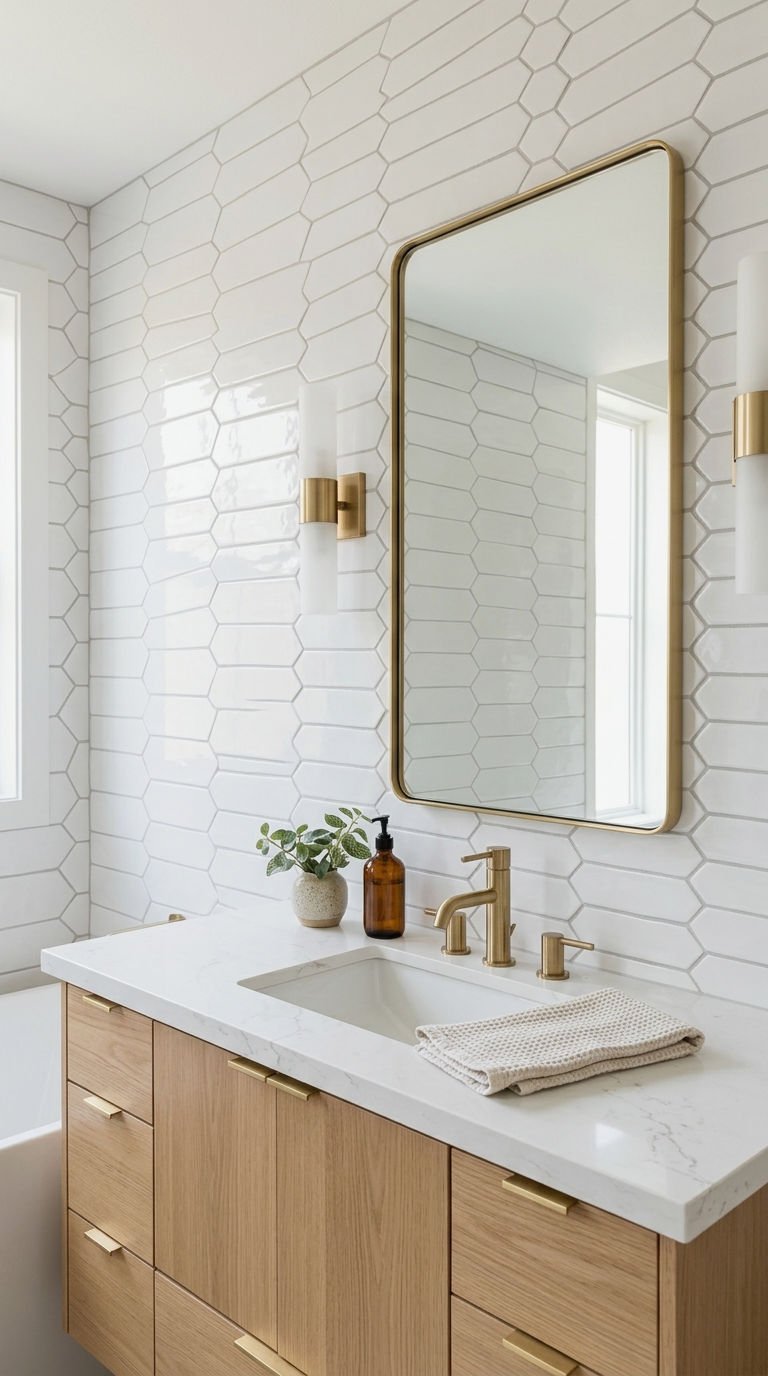
Sometimes the simplest pattern wins. Lay picket tiles in a half offset brick bond, and you get a clean, familiar look with a modern twist. Ever want pattern without any fuss? This one delivers.
Vertical or horizontal, both directions work. Horizontal stretches a narrow room, while vertical lifts a low ceiling. Choose the direction that solves your biggest room quirk.
Beginners can tackle this layout themselves, because the cuts stay simple. Take your time with spacing, and use a level on every row for a clean result.
- Offset: one third or one half
- Cost: lowest labor of all the patterns
- Style: timeless and easy to refresh with paint
15. Zigzag Picket Tile for Kids Bathroom

Kids bathrooms need fun that survives splashes. A zigzag picket layout feels playful, and the busy pattern forgives toothpaste drips and wet footprints. Pick cheerful colors like sunny yellow or sky blue.
Keep the rest of the room simple so the tile stays the star. Durable glazed ceramic wipes clean in seconds, which any parent will appreciate.
Let your kids help pick the colors. They will love a bathroom that feels like theirs, and brushing teeth may even become less of a battle. Add a fun shower curtain for extra personality. Worth a try, right?
- Colors: yellow, aqua, or coral
- Durability: glazed ceramic cleans easily
- Grout: stain-resistant epoxy lasts longer
16. Handmade Zellige Picket Tile Texture
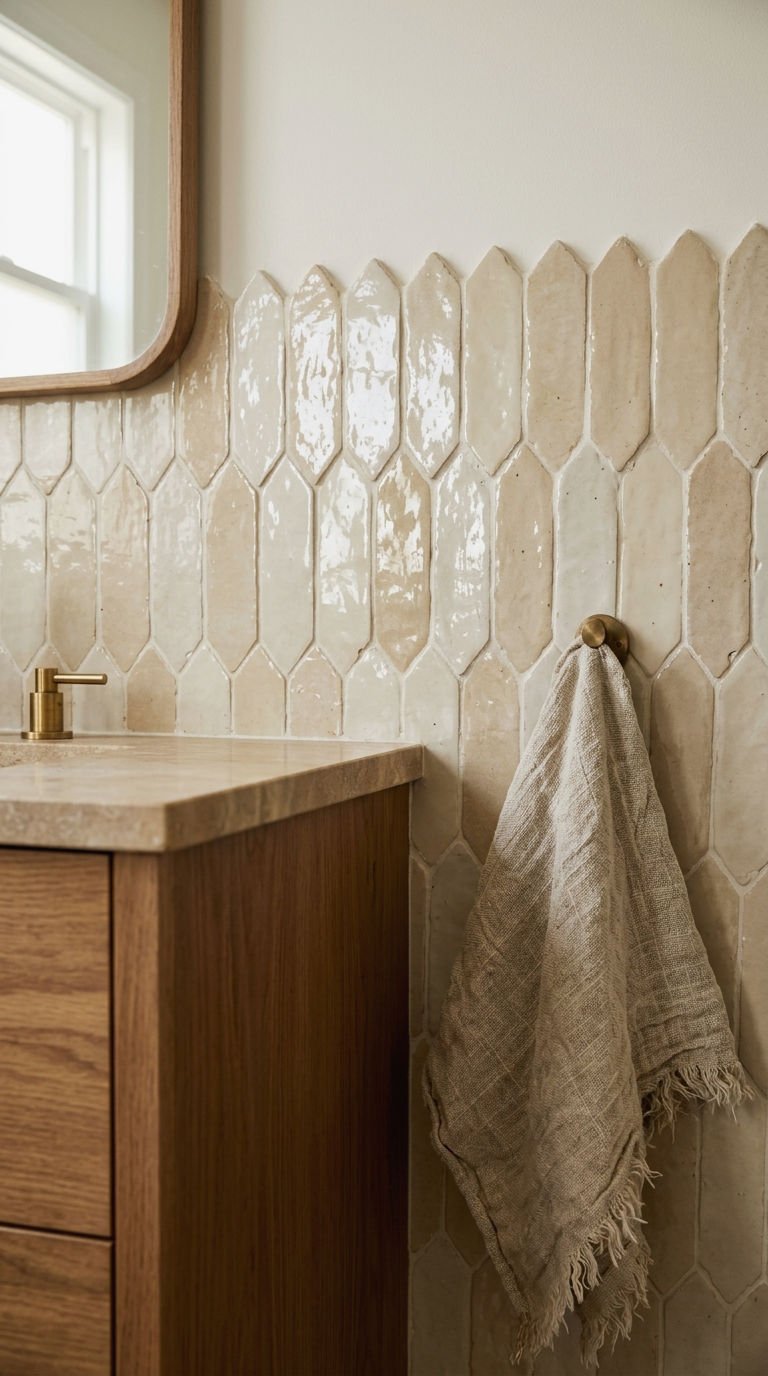
Zellige-style tiles ripple with tiny imperfections, and that is the entire charm. Each picket piece catches light a bit differently, so the wall shimmers like water. Machine-made tile simply cannot copy it.
Embrace the wobble. Use a slightly wider grout line, and let the uneven edges do their thing. I think this texture suits earthy and Moroccan inspired bathrooms best.
Source your tile from a trusted supplier and order a few extra boxes. Each batch varies in shade, and you want enough pieces to blend the colors across the whole wall.
- Look: glossy, uneven, and organic
- Installer note: expect small size variation
- Pairing: warm woods and linen accents
17. Picket Tile Border Around a Mirror

You do not need to tile an entire wall to get the look. Frame your vanity mirror with a picket tile border, and the mirror becomes a statement piece. It is a weekend-sized project with a big payoff.
Choose a tile color that contrasts with the wall paint. Then keep the pattern simple, like a straight stack, so the frame looks intentional.
Frame a window, a niche, or a shelf the same way for a cohesive look. A single bold detail beats a dozen small ones every time.
- Border width: about six to eight inches
- Mirror shape: round or arched looks great
- Budget: uses very few tiles
18. Mixed Finish Picket Tile Feature Wall
Mixing matte and glossy tiles in the same color creates quiet drama. Light bounces off the glossy picket pieces while the matte ones soak it in, so the wall shimmers in a subtle, checkerboard way.
Stick to one color family to keep things calm. Scatter the glossy tiles randomly or place them in stripes. I like random best, because it feels relaxed and a bit unexpected.
Order both finishes from the same collection to guarantee a color match. Samples help you check the glossy and matte shades side by side in your own light.
- Color: one shade, two finishes
- Layout: random or striped
- Light: side lighting shows off the contrast
19. Diagonal Picket Tile for Narrow Bathrooms

Narrow bathrooms feel like hallways with plumbing. Diagonal picket tile on the floor breaks that tunnel effect by pulling the eye sideways. Suddenly the room feels wider, and you did not move a single wall.
Use a light tile color, and keep the grout close to the tile shade. That combo smooths the surface and adds even more openness.
Plan the cuts at the edges before you start. Diagonal layouts waste a bit more tile, so order about fifteen percent extra to keep the project stress free. Trust me on that one.
- Angle: forty five degrees
- Color: light neutrals expand the space
- Bonus: continue the tile into the shower for flow
20. Pastel Blush Picket Tile Shower Surround
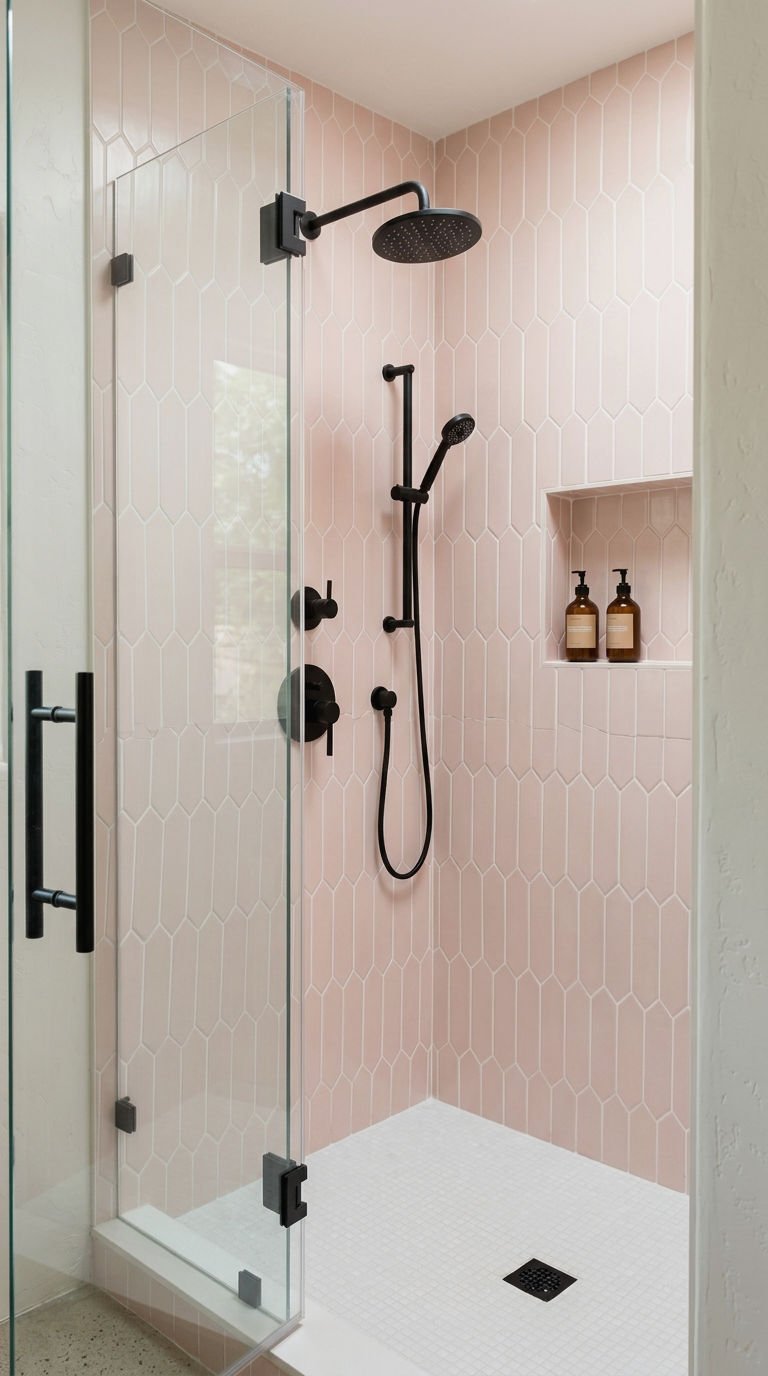
Blush pink gives your shower a soft, flattering glow. Picket tile in a pale rosy shade adds geometry, while the pastel tone keeps everything light and airy. It feels sweet without becoming childish.
Pair it with matte black or brushed gold fixtures for a grown-up finish. White grout keeps the look fresh, and a glass door lets the color show off.
Warm lighting makes blush tile glow, while cool bulbs can wash it out. Test your bulbs before you finalize the color, and choose a soft white option for the best effect.
- Palette: blush, white, and warm gold
- Fixtures: matte black for contrast
- Glass: clear panels show the full wall
21. Picket Tile Floor to Ceiling Wet Room

A wet room wraps everything in tile, so the pattern becomes the whole personality. Picket tile from floor to ceiling creates a seamless, cocoon-like space. It looks sleek, modern, and surprisingly calm.
Use one tile color throughout to keep the room unified. Add a linear drain and proper waterproofing, because gorgeous tile cannot save a leaky floor. Hire a pro for that part.
Choose a matte, slip-resistant tile for the floor section, and keep a gentle slope toward the drain. Comfort and safety matter as much as the look in a room this wet.
- Waterproofing: professional membrane required
- Look: one color, one pattern
- Drain: linear drain for a clean finish
Frequently Asked Questions
What is picket tile?
Picket tile is a long, narrow tile with rounded or pointed ends, much like a classic fence picket. It comes in ceramic, porcelain, and glass. You can install it in dozens of patterns, from simple stacks to bold chevrons.
Can I use picket tile on a bathroom floor?
Yes, as long as the tile carries a floor rating and a slip-resistant finish. Porcelain works best because it handles moisture and foot traffic well. Pick a mid tone grout to hide everyday dirt.
Which pattern suits a small bathroom?
Herringbone and diagonal layouts add movement and make walls feel farther apart. A vertical stack also works well when you want extra ceiling height. Keep the colors light to open up the space.
Does picket tile cost more to install?
Complex patterns like chevron and herringbone need more cutting, so labor costs rise. Straight stack and offset layouts cost less. Get quotes from several installers before you commit to a design.
Final Thoughts
Picket tile proves that a small shape can make a big statement. Whether you love a calm sage backsplash, a moody black accent wall, or a playful zigzag floor, you now have 21 geometric options to steal.
Pick one idea, mix in a second, and make the bathroom truly yours. Which pattern will you try first? Save your favorites, grab some samples, and start planning your fresh new look.
